Friday, May 2, 2025

Module 6, Fiction , Fantasy and Graphic Novels


1. BIBLIOGRAPHY
Telgemeier, R. (2020). Smile. New York: Graphix. ISBN 978-1338740264.

2. PLOT SUMMARY

Raina dreams about living an ordinary sixth-grade life. During Girl Scouts Raina experiences a severe accident which damages her two front teeth when she trips and falls.  Raina endures a prolonged dental process which includes multiple surgeries and braces and headgear and a retainer with artificial teeth. Raina faces a difficult time because she must handle both her changing appearance and a major earthquake and boy-related confusion and fake friendships. Readers experience the pain of tooth loss and social rejection and the happiness of self-discovery because of Raina's struggles. Raina learns to accept her genuine smile in all ways while discovering genuine confidence and true friendship and personal development.

3. CRITICAL ANALYSIS

Smile tells the story of adolescence through humorous and truthful illustrations of growing up. Readers immediately feel connected to Raina because she presents as a character who is deeply  relatable. The dental problems Raina faces function as both actual barriers and metaphors for her need to be herself while remaining part of her social group. Through her clear perspective and strong narrative voice Telgemeier creates an authentic and welcoming environment for readers to experience Raina's world. The story’s basic locations of school and home and orthodontist offices become alive through illustrations which both depict physical spaces and emotional states. The story explores perseverance and self-acceptance and friendship as core themes which lead to Raina's rewarding emotional development. Her journey is believable and engaging, with each setback pushing her closer to discovering who she truly is. The author's playful style, paired with impactful visual storytelling, makes this graphic memoir a powerful and accessible choice for middle-grade readers.

4. REVIEW EXCERPTS

  • Kirkus Reviews: “Irresistible, funny, and touching.”
  • Booklist: “One of the most widely loved kids' graphic novels in recent history.”
  • The New York Times: “It hits home partly because there is nothing else out there like it.”
  • Awards: Will Eisner Comic Industry Award Winner, Boston Globe-Horn Book Honor Book, Vermont Golden Dome Book Award Winner

5. CONNECTIONS

  • Students can create their own short graphic memoir panels about a personal experience that taught them a life lesson.
  • Great for classroom discussions on topics like self-esteem, peer relationships, and resilience.
  • Pair with Telgemeier’s Sisters and Guts for a thematic unit on growing up and family dynamics.
  • Use in SEL lessons to explore how young people process change, anxiety, and personal growth.
  • Invite students to compare Raina’s story to Beverly Cleary’s Ramona series or Cece Bell’s El Deafo for additional perspectives on childhood challenges and empowerment.


1. BIBLIOGRAPHY
Fajardo, K. (2022). Miss Quinces. New York: Graphix. ISBN 978-1338535594.

2. PLOT SUMMARY

The summer camp experience Sue had envisioned with her friends creating comics becomes impossible because her family embarks on a Honduras vacation. Sue's world takes a turn for the worse when her mother reveals the unwanted news about Sue's upcoming quinceañera. Sue finds it completely unacceptable to wear a frilly outfit while participating in customs which do not align with her cultural background.  Sue starts to understand the importance of her cultural traditions by spending time with her family members, particularly her grandmother whom she loves. After her abuela passes away Sue gains the power to celebrate life in her own manner while understanding that tradition does not force her to lose her individuality.

3. CRITICAL ANALYSIS

The graphic novel Miss Quinces presents an emotional portrayal of cultural identity development through its exploration of family obligations and personal growth. The story maintains a realistic tone that accurately represents the genuine conflicts people experience between personal needs and cultural customs. Sue's resistance to her quinceañera seems genuine and her development throughout the narrative brings emotional strength. Sue's bond with her abuela forms the story's core element as it brings laughter and love before transforming into sadness that leads to personal transformation. The Honduran landscape appears vividly in the illustrations through truck rides along bumpy roads and lively family events in rural areas. Through his vivid coloring and dynamic drawing Sue's emotional state matches the scenery which becomes alive in each panel. The graphic storytelling approach maintains audience engagement through a mix of humor and heartfelt expression. The book uses blue font for Spanish text and black font for English to demonstrate bilingual identity fluidity while Sue gains confidence in both languages. The story teaches readers to maintain their authenticity by exploring their cultural identity. Sue evolves into her authentic self instead of transforming into a different person.


4. REVIEW EXCERPTS

  • School Library Journal: “With all of the charm of Raina Telgemeier and Lucy Knisley’s works... will especially resonate with readers from bicultural communities.”
  • The Horn Book: “Fajardo’s expressive use of line, and color palette of cool blues and pinks convey the complexity... of Sue’s feelings.”
  • Booklist: “Fajardo’s colorful artwork is lively, full of emotion... will appeal to fans of Raina Telgemeier and Jen Wang.”
  • Publishers Weekly: “A sympathetic look at a girl learning that she can be herself and still cherish family tradition.”
  • Awards: National Indie Bestseller, ALA Best Graphic Novel for Children, NPR Books We Love, Horn Book Best Book of the Year

5. CONNECTIONS

  • Pair with Raina Telgemeier’s Drama or Sisters to explore themes of cultural identity and growing up.
  • Students can research and present different cultural coming-of-age ceremonies, comparing similarities and differences.
  • A classroom activity could include students writing and illustrating their own “mini graphic memoirs” centered around a family tradition or moment of self-discovery.
  • Readers could also reflect on the use of bilingual dialogue and discuss how it shapes character identity and voice.
  • Follow up with discussions on intergenerational relationships and the importance of listening to elder voices.


1. BIBLIOGRAPHY
Soontornvat, C. (2022). The Tryout. Ill. by Joanna Cacao. New York: Graphix. ISBN 978-1338741261.

2. PLOT SUMMARY

Christina has always been different from the rest of the students at school because Christina is Thai American. Her best friend,  and Megan is Iranian American but they both want to belong. The cheerleading squad becomes the ideal opportunity for the girls to gain acceptance from their peers. Christina faces two major challenges during tryouts as she needs to overcome both her fear of failing and her changing sense of identity and friendships. The initial pursuit of popularity transforms into a journey that helps Christina discover herself while strengthening her cultural identity and understanding that staying true to oneself is the greatest achievement.


3. CRITICAL ANALYSIS

This middle grade graphic memoir stands out through its authentic storytelling and heartfelt content and meaningful lessons. Readers will identify strongly with Christina because they can connect to her fears and hopes along with her inner struggles that match their own middle school emotions, past or present.  The story shows both the exhilaration and tension of important seventh-grade moments including cheerleading tryouts and changing relationships. The audience genuinely supports Christina's journey toward squad membership and her understanding of her intrinsic value. Through her authentic storytelling Soontornvat combines humor with honesty to create a narrative which displays both her weaknesses and her strength. The story organically weaves together themes about belonging and identity alongside internalized pressure as it explores racism in both explicit and subtle ways. The illustrations by Joanna Cacao play an essential role in establishing tone by employing vibrant colors and expressive facial expressions and symbolic visual elements (sparkly cheerleader backgrounds and shadowy self-doubt scenes) which reflect Christina's emotional state. The authentic feel of the story results from its consistent point of view alongside distinctive language and cultural references that include homecoming mums and Thai traditions as well as family dynamics. Through this memoir readers learn that being genuine represents the greatest achievement of all.

4. REVIEW EXCERPTS

  • Kirkus Reviews: “A funny, painfully honest look at a middle schooler finding her way.”
  • School Library Journal: “Readers… will want to invite Christina to sit at their table to share food, stories, and the secrets to self-confidence.”
  • Publishers Weekly: “Nail-biting… fluidly injecting their athletic pursuits with lively energy using bright color palettes.”
  • Shelf Awareness: “Cringe-worthy in the best way… an inspiring and insightful graphic memoir.”
  • Awards & Recognition: Instant #1 Bestseller, multiple starred reviews, praised by The New York Times as “a captivating middle-grade gem”

5. CONNECTIONS

  • This book pairs well with Invisible by Christina Diaz Gonzalez and Allergic by Megan Wagner Lloyd for units on identity, friendship, and middle school transitions.
  • Students could write a journal entry or comic strip about a time they tried something new or took a risk socially or emotionally.
  • Teachers can use this book in SEL or diversity lessons to open conversations about cultural pride, microaggressions, and building confidence.
  • A group activity could involve students designing a personal “badge” that represents their identity, strengths, and values, just as Christina finds strength in her roots.
  • The author's note and real photos at the end make this a great text for autobiographical storytelling discussions.


1. BIBLIOGRAPHY
Alexander, K. (2014). The Crossover. Ill. by Dawud Anyabwile. New York: Clarion Books. ISBN 978-0544107717.

2. PLOT SUMMARY

Josh “Filthy McNasty” Bell demonstrates his basketball abilities as a 12-year-old through his impressive crossover and intense dedication to the sport. Josh and JB share all aspects of their lives including basketball and school as well as everything else but JB's new interest in a girl creates distance between them. Josh develops feelings of jealousy and insecurity because he has trouble adapting to the changing connection between him and his brother. The family struggles with serious health problems affecting their father who played professional basketball before his illness. Josh’s tale about rivalry, regret and reconciliation plays out through rhythmic and emotional verse.

3. CRITICAL ANALYSIS

The Crossover stands is a  novel written in verse that has both emotional depth and energetic force. Josh is an authentic protagonist whose voice unites athletic confidence with poetic sophistication. The combination of free verse with concrete poetry and basketball terminology creates a rhythm which corresponds to the speed of basketball and teenage life. The family atmosphere stands authentic because it depicts their mother who focuses on academics versus their father who supports their musical talents with his love of jazz. The story takes readers through Josh's experience with sibling conflict and teenage life changes while his father faces a serious health emergency. The story integrates themes about personal identity alongside brotherhood and growing up and coping with loss. The verse structure enables readers to experience Josh's emotional vulnerability through his internal thoughts and visual effects are used to enhance emotional moments or dramatic actions. Basketball definitions and rules that appear throughout the text provide both humorous and meaningful insights to the story. When the brothers finally make peace with each other following their father's death the emotional moment creates a powerful yet uplifting conclusion. Through his voice Alexander delivers a profound message about how life operates without a set plan while demonstrating that success means more than winning.

4. REVIEW EXCERPTS

  • School Library Journal: “Alexander has crafted a story that vibrates with energy and heart and begs to be read aloud.”
  • Booklist: “An accomplished author and poet, Alexander eloquently mashes up concrete poetry, hip-hop, a love of jazz, and a thriving family bond.”
  • Bulletin of the Center for Children’s Books: “Will inspire budding players and poets alike.”
  • Awards: Newbery Medal Winner, Coretta Scott King Award,  #1 Best Seller in Children’s Basketball Books


5. CONNECTIONS

  • Pair with Rebound, Alexander’s prequel, for a fuller understanding of the Bell family.
  • Use as a mentor text for writing poetry with voice, students can create “sports poems” or free verse narratives about their passions.
  • Compare with Ghost by Jason Reynolds for themes of identity and overcoming personal challenges.
  • Perfect for reluctant readers, especially those interested in sports or music.
  • Students can create a character trait chart tracing Josh’s emotional growth across the book, supported by evidence from the verse.


Tuesday, April 15, 2025

Module 5: Historical Fiction Book Reviews


1. BIBLIOGRAPHY

Erdrich, Louise. Chickadee. New York: HarperCollins, 2013. ISBN 9780060577926


2. PLOT SUMMARY

At the start of the story, the boys share an unbreakable connection until the kidnapping of Chickadee by two dim-witted brothers who aim to force him into servitude. The family searches for Chickadee throughout the Great Plains while he finds inner strength in the characteristics of the namesake bird which leads him to demonstrate bravery and intelligence. Throughout the story readers meet Two Strike the determined aunt of Chickadee and experience the difficulties and cultural traditions of Ojibwe people during a pivotal period in U.S. history. The narrative balances threatening situations with comedic elements while it shows how survival needs merge with traditional cultural practices.


3. CRITICAL ANALYSIS

 The historical fiction comes alive through Erdrich's skillful combination of realistic characters and detailed setting descriptions. The story follows two mischievous yet loyal brothers Chickadee and Makoons as they assist their family in a way that feels authentic to both the period and Ojibwe cultural traditions. The glossary of Ojibwe language creates deeper cultural understanding without causing confusion among young readers. The historical events in the story become accessible through real world details about mosquito swarms on Red River oxcart trails and traditional foods like bouyah which stem from authentic historical records. The setting plays a fundamental role because readers discover information about the Great Plains and the Métis population through an included map that shows Chickadee's movements. The narrative combines elements of adventure and survival with essential themes regarding family unity and personal identity. Although the story starts with a difficult situation of kidnapping it receives gentle treatment through humorous moments which leads to discussions about endurance as well as fairness and children's ability to overcome challenges. The author uses her signature mix of warmth and occasional playfulness throughout the book particularly when depicting the foolish kidnapping brothers. The book contains a family tree and author Q&A along with activity prompts that assist young readers in establishing personal and historical connections. Through her traditional storytelling voice Erdrich presents an engaging historical narrative that respects Native American history.


4. REVIEW EXCERPT(S)

School Library Journal: Erdrichs storytelling is masterful. Readers will be more than happy to welcome little Chickadee into their hearts.

Kirkus Reviews: A beautifully evolving story of an indigenous American family.

Horn Book: “Readers will absorb the history lesson almost by osmosis; their full attention will be riveted on the story.”

Booklist: “Most affecting are the descriptions of Makoons’ loneliness without his brother.”

Scott O’Dell Award for Historical Fiction


5. CONNECTIONS

This book lends itself to class discussions about Native American culture, historical survival, and sibling bonds.

Other books that explore Native American history or family strength include:

Erdrich, Louise. The Game of Silence. ISBN 0060297891 — The prequel to Chickadee, exploring the journey of Chickadee’s mother, Omakayas.

Bruchac, Joseph. Code Talker: A Novel About the Navajo Marines of World War Two. ISBN 0142405965 — A story of Native American contribution during WWII.

Dorris, Michael. Morning Girl. ISBN 078681358X — Set just before the arrival of Columbus, it tells a gentle story of Taino siblings in the Caribbean.


1. BIBLIOGRAPHY

Yep, Laurence. Hiroshima: A Novella. New York: Scholastic, 1995. ISBN 9780590208321


2. PLOT SUMMARY

Sachi is a twelve-year-old girl who lives in Hiroshima, Japan when the Second World War is ongoing. On the morning of August 6th, 1945, the children put on their air-raid hoods when they hear a bomber plane passing above. They have taken off the hoods thinking the danger is over, only to realize the bomber was only a scout plane for the second plane, the Enola Gay. Sachi is suddenly and violently thrust into a world that no one can comprehend. Her sister is dead, the city is in shambles, and she is left with bad burns and a damaged psyche. For years, she hides from the world because people shunned her because of her scars and her radiation sickness. At the end, Sachi is one of the Hiroshima Maidens, a group of young women from Hiroshima who are taken to the United States for surgery. Laurence Yep gives readers an idea of how nuclear war affects individuals and a nation in his story.


3. CRITICAL ANALYSIS

Sachi is a believable and relatable young character who has the right to be the voice of the children who were affected by the bombing. Her daily life, her fears, and later,  her courage are the emotional price of surviving something like that. The novella’s simple language helps the reader to concentrate on her emotional state and to understand the size of the catastrophe in her way of thinking. The story is based on the actual historical events and is presented in a chronological order starting from the day of the bombing and ending with Sachi being in the United States and coming back to Japan. Even though the story is short, it paints a vivid picture of what the bombing was like and the long way towards healing. Choosing to narrate the story through the eyes of a child survivor helps to simplify the complex issues to be comprehensible to the young readers. The setting is vividly conveyed. The destruction of Hiroshima is also described in detail, the light, the sound, the wind and the pieces of glass flying around to give a picture of the disaster caused by the bomb. Through short present-tense chapters and factual inserts between fictional sections the book achieves both emotional impact and historical accuracy. The story presents itself as a combination of educational content and narrative structure despite occasional abrupt transitions. There are source notes and context in the back matter that make the book feel more real.

4. REVIEW EXCERPT(S)

Publishers Weekly: “Yep's account of the bombing of Hiroshima and its devastating aftermath is at once chilling and searing, hushed and thundering.”

School Library Journal: “His words are powerful and compelling… readers will be moved by her tale.”

5. CONNECTIONS

This novella can serve as a powerful entry point for students studying WWII, Japanese history, or the effects of nuclear warfare. It also invites reflection on empathy, peace, and survival.

Recommended companion reads:

Maruki, Toshi. Hiroshima No Pika. ISBN 0688012973 — A picture book that offers a child’s-eye view of the bombing through illustrations and simple narration.

Morimoto, Junko. My Hiroshima. ISBN 0670846394 — A more personal and visual account of surviving the Hiroshima bombing, told by an actual survivor.

Bunting, Eve. The Terrible Things: An Allegory of the Holocaust. ISBN 059046154X — Though not about Hiroshima, this allegorical tale promotes discussion about war, fear, and moral responsibility.


1. BIBLIOGRAPHY

Phelan, Matt. The Storm in the Barn. Somerville, MA: Candlewick, 2011. ISBN 9780763652906

2. PLOT SUMMARY

The story takes place in Kansas during the devastating Dust Bowl year of 1937 where the main character Jack Clark faces environmental disasters and emotional struggles. The farm faces destructive dust storms while his sister suffers from "dust pneumonia" and he faces bullying because of his shy nature. Jack's discovery of an enigmatic figure in the abandoned barn causes his perception of reality to become uncertain. The mysterious presence could be genuine or it might stem from "dust dementia" which people in his struggling community mention. Jack must find the courage to face the darkness inside the barn because it leads him to discover hidden inner strength.

3. CRITICAL ANALYSIS

Jack presents as a realistic character because he represents an ordinary boy who strives  to survive during a challenging period. Readers can easily connect with Jack because he wants to protect his family and his sick sister and gain his father's approval. The narrative combines authentic Dust Bowl historical elements such as dust storms and crop failures with the fantastical element of the barn mystery figure which creates a historical and imaginative storytelling experience. The story depends heavily on its setting because the soft illustrations in the book accurately depict the dryness and despair that characterized towns during this period. The story explores three universal themes which remain relevant to modern readers: courage, coming of age and hope against all odds. The author uses minimal text alongside expressive illustrations to create a story that focuses on emotions and atmosphere which makes the book suitable for reluctant readers and fans of graphic novels. Through the blend of historical facts and folklore the story presents an authentic portrayal of how stories combined with bravery function as tools for navigating difficult times.


4. REVIEW EXCERPT(S)

Booklist: Phelan turns every panel of this little masterpiece into a spare and melancholy window into another era.

School Library Journal: Children can read this as a work of historical fiction, a piece of folklore, a scary story, a graphic novel, or all four.

Bulletin of the Center for Childrens Books: With its appealing format and touch of fantasy, this tale of coming of age in hard times will entice readers who may otherwise be indifferent to historical fiction.

Horn Book: Measured, masterful panel pacinga tender, triumphant resolution.

5. CONNECTIONS

This book is a great conversation starter about environmental hardship, family strength, and using imagination to process trauma. It’s ideal for visual learners and reluctant readers who may be drawn in by the graphic novel format.

Related titles:

Murphy, Jim. Children of the Dust Bowl: The True Story of the School at Weedpatch Camp. ISBN 9780395776087 — A nonfiction account of Dust Bowl children and how they survived and thrived.

Taylor, Mildred D. Roll of Thunder, Hear My Cry. ISBN 9780142401125 — Though set in a different era and region, this novel explores resilience and injustice through the eyes of a young narrator.

Larson, Kirby. Hattie Big Sky. ISBN 9780385735957 — A historical novel about a teenage girl homesteader during WWI, filled with grit and hope, much like Jack’s journey.


1. BIBLIOGRAPHY

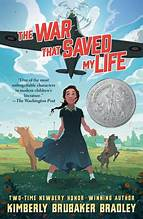
Bradley, Kimberly Brubaker. The War That Saved My Life. New York: Dial Books, 2016. ISBN 9780147510488


2. PLOT SUMMARY

In England during World War II, The War That Saved My Life tells the story of Ada, a ten-year-old girl born with a clubfoot, who was kept indoors by her cruel, ashamed mother. When London begins evacuating children to the countryside to escape bombings, Ada escapes alongside her younger brother Jamie. The two are placed with Susan Smith, a reluctant guardian still grieving personal losses. Gradually, Ada starts to learn about the world, how to ride a pony, read, and above all, how to trust. Just when the air raids loom and the war approaches, Ada finds strength and courage she never knew she had and forms a bond with Susan that changes their lives.


3. CRITICAL ANALYSIS

Ada and Jamie are very believable characters, fearful, strong and loyal to each other as siblings. Ada’s voice, having been shaped by years of neglect and isolation, is unapologetic and truthful. Her progression from wary and defensive to determined and brave gives the story an emotional depth. Susan is complex, reluctant and grieving at first, she becomes a gentle, steady force. Even the children’s mother, though cruel, is written in a way that will resonate with some readers who may be able to identify with feelings of rejection or fear. The story is historically accurate, but it is presented in a child friendly manner. Events like bombings, rationing, and evacuations are realistically portrayed through Ada’s eyes, so that younger readers can understand how they made her feel. A scene in which a war ad terrifies Ada during a movie, or where ration coupons are explained, helps to bring the story back to real wartime events, without overwhelming the reader. The setting is a major character in this story, and it brings wartime Britain to life. From the crowded London flat Ada escapes to the quiet countryside house near a Royal Air Force base, the locations are carefully described, anchoring the story in both time and place. Themes of courage, chosen family, and personal freedom are timeless. Although war is the backdrop, the heart of the story is about emotional healing and the importance of oneself and other people.  These universal themes are still relevant for children today, particularly for those in need or those seeking a sense of belonging. Bradley used first-person accounts of the war and  facsimiles of books and pamphlets published then, which gives it a grounded, well-researched feel.

4. REVIEW EXCERPT(S)

Kirkus Reviews: Brisk and honestCause for celebration.

Publishers Weekly: Poignant.

The Horn Book: Powerful.

Awards:

Newbery Honor Book

Schneider Family Book Award

Kirkus Best Middle Grade Book of the Century


5. CONNECTIONS

This book invites discussion on disability, resilience, and the effects of war on children. It pairs well with lessons on WWII history, empathy, and family dynamics.

Suggested related reads:

Lowry, Lois. Number the Stars. ISBN 9780547577098 – Another middle-grade WWII novel, focusing on friendship and bravery in Nazi-occupied Denmark.

Giff, Patricia Reilly. Lily’s Crossing. ISBN 9780440414537 – A WWII story set in New York, with themes of loss, courage, and unexpected friendship.

Bradley, Kimberly Brubaker. The War I Finally Won. ISBN 9780525429203 – The sequel to The War That Saved My Life, continuing Ada’s journey with more challenges and growth.

Saturday, April 5, 2025

UDL: Universal Design for Learning

 Serving Up Success with UDL

Teaching should never feel like juggling thirty plates at once. But as educators, we often find ourselves overwhelmed trying to meet the needs of every student. When I first learned about Universal Design for Learning (UDL), the dinner party analogy really hit home. Instead of preparing thirty individual meals (Differentiated Instruction), UDL encourages us to set up a buffet: a wide variety of choices, thoughtfully prepared, where students can serve themselves based on their needs, interests, and strengths.

This buffet-style mindset is already present in parts of my teaching practice. I use a variety of media when delivering content, text, videos, hands-on activities, and group projects. I also prioritize classroom collaboration and student reflection, encouraging peer support and self-evaluation. These align with UDL's principles of offering multiple means of representation, engagement, and expression.

Still, there are strategies I could add right away to enhance my practice. For example, I can begin posting clear goals and objectives in a consistent place and provide flexible deadlines or pacing options when possible. I can also offer students more autonomy in choosing how they demonstrate understanding, whether through writing, drawing, video, or oral presentation.

One area that excites me but feels a bit daunting is Checkpoint 6.4: Enhancing capacity for monitoring progress. I know how valuable it would be for students to visually track their own learning and reflect on their growth. However, I need more training in tools and strategies to implement this meaningfully. I want to explore digital portfolios or apps that help students monitor progress and receive tailored feedback.

What I Want to Explore Further

Going forward, I am especially interested in using educational technology to make lessons more accessible and to support student self-assessment. I want to research apps and platforms that align with UDL principles, especially those that help students track progress, organize thoughts, and share learning in creative ways.

Here are some resources I plan to explore:

·       CAST UDL Guidelines (https://udlguidelines.cast.org) for detailed checkpoints and examples

·       Understood.org for real-life classroom applications of UDL, especially for students with disabilities

·       "UDL Now!" by Katie Novak for practical strategies I can implement immediately

·       Tech specialists at my school or district to help me learn tools like Seesaw, Google Sites, or digital portfolios

With the right support and tools, I believe I can create a more inclusive, empowering learning environment. UDL helps shift the focus from simply delivering information to designing learning experiences that spark curiosity and independence in every student. By offering a buffet of learning options, I’m not just teaching content, I’m teaching students how to learn.

As I continue learning about Universal Design for Learning, I’m realizing how naturally it connects to the goals of a modern school library. The framework encourages not just access, but meaningful engagement and expression from all students. What stands out most to me is that UDL is not about creating 20 individualized lesson plans, it’s about designing one flexible environment that supports 20 unique learners. It’s about empowerment.

One of the most exciting takeaways is the idea that choice builds engagement. By allowing students to express what they know in different ways, whether through video, illustration, audio, or hands-on projects, they take ownership of their learning. I want to continue learning how to offer these choices through digital tools, adaptive technology, and collaborative planning with teachers.

I also plan to explore more about how UDL connects with the affective, recognition, and strategic brain networks. Understanding the neuroscience behind learning can help me design lessons and library activities that tap into students’ motivation, comprehension, and executive functioning. My goal is to create a space that is not only physically accessible, but also cognitively and emotionally inclusive.

Sunday, March 30, 2025

LSSL 5360 Module 4: Nonfiction and Biography

 Nonfiction and Biography


1. BIBLIOGRAPHY

Jenkins, Steve. 2014. Never Smile at a Monkey: And 17 Other Important Things to Remember. Boston, MA: Clarion Books. ISBN 978-0544228016

2. PLOT SUMMARY

Steve Jenkins delivers an interesting nonfiction picture book to young readers who learn that some seemingly harmless or cute animals possess unexpected dangerous traits. The book presents eighteen interesting animal facts which function as warnings about platypus contact and monkey interactions. The book shows readers different animals with their distinctive behaviors through short explanations about unsafe ways to interact with them. The last part of the book provides detailed information about every animal shown earlier to fulfill readers' curiosity.

3. CRITICAL ANALYSIS

 Steve Jenkins establishes authority in this book through his established reputation as a nonfiction author and the reliable nature of his presented information. School Library Journal and Booklist provide reviews that validate the high quality and trustworthy nature of the presented content. The book starts with an attention-grabbing introduction followed by separate spreads about different animals before concluding with additional detailed information. The purposeful sequence enables independent student exploration while developing their comprehension. The book features Steve Jenkins' characteristic cut-and-torn-paper collage illustrations which create textured moving colorful pages throughout the book. The strategic use of font size and placement in the text effectively presents crucial information while guiding the reader's attention. The author presents information through an informal tone which addresses children directly to deliver educational content that also entertains them. The author presents interesting small facts which create curiosity about the subject while leading readers toward additional educational exploration. Through his love for animals and science the author presents his work in an innovative way that promotes both analytical thinking and amazement.

4. REVIEW EXCERPT(S)


“Visually stunning... Jenkins proves there may not be a texture that he can’t mimic on the page. The high-interest marriage of animals and danger, along with large, vibrant visuals, makes this a prime candidate for group sharing. — School Library Journal, starred review
“With his trademark cut-paper technique… additional details and artwork at the end will flesh out some of the finer points for older children.” — Booklist

5. CONNECTIONS

Connections:
Invite students to select one of the animals featured and research more about its habitat or defenses. Have them create a mini-poster or “danger warning” with facts and illustrations.
Other books about animals with surprising or unusual features:
Jenkins, Steve. What Do You Do With a Tail Like This? ISBN 9780618997138
Jenkins, Steve. Actual Size. ISBN 9780547512914
Jenkins, Steve and Robin Page. Creature Features: Twenty-Five Animals Explain Why They Look the Way They Do. ISBN 9780544233515


1. BIBLIOGRAPHY

Kerley, Barbara. 2008. What To Do About Alice?: How Alice Roosevelt Broke the Rules, Charmed the World, and Drove Her Father Teddy Crazy! Illustrated by Edwin Fotheringham. New York: Scholastic Press. ISBN 978-0439922319

2. PLOT SUMMARY

The book tells the story of Alice Roosevelt who was the daughter of President Theodore Roosevelt and who was famous for being rebellious and nonconformist. Alice had a desire to “eat up the world” but her father described her actions as “running riot.”  Wherever she was, whether at the White House or traveling around the world, Alice was always full of energy and spirit. The book offers a look at her life, and how she made every experience into an adventure.


3. CRITICAL ANALYSIS

The biography of Alice Roosevelt written by Barbara Kerley is accurate, interesting, and well-documented. The book has been awarded several awards including the Sibert Honor and Boston Globe-Horn Book Honor and has been reviewed by School Library Journal, Kirkus and The New York Times. The structure is clear and coherent, starting with Alice’s birth and childhood and moving on to her growing up years, emphasizing her boldness and how she defied the norms. The author also provides an introduction and a helpful author’s note at the end to give more information. The design is visually appealing, with a fun and messy layout that suits Alice. Fonts and text placement change from one page to another, which is in line with her energetic personality. Edwin Fotheringham’s illustrations are lively and complement the text well, depicting Alice in motion, sliding, jumping, and dancing. The style is clear, spirited, and respectful, depicting Alice as unique and strong-willed without making her seem out of control. The book encourages young readers to be themselves, try new things, and discover the world with curiosity and courage. It has a good message about self-confidence and not being afraid to be different.

4. REVIEW EXCERPT(S)

“Theodore Roosevelt’s irrepressible oldest child receives an appropriately vivacious appreciation in this superb picture book... It’s a gleeful celebration of a fully, unapologetically led life.” — Kirkus, starred review
“Kerley’s text gallops along with a vitality to match her subject’s antics... Fotheringham’s digitally rendered, retro-style illustrations are a superb match for the text.” — School Library Journal, starred review
“It’s hard to imagine a picture book biography that could better suit its subject than this high-energy volume.” — Publishers Weekly, starred review

5. CONNECTIONS

Have students write a journal entry pretending to be Alice Roosevelt, describing a day in her adventurous life at the White House. This could be illustrated with a comic strip or timeline.
Other picture book biographies of bold, independent women:
Kerley, Barbara. The Extraordinary Mark Twain (According to Susy). ISBN 9780545233170
Stone, Tanya Lee. Elizabeth Leads the Way: Elizabeth Cady Stanton and the Right to Vote. ISBN 9780805079032
Markel, Michelle. Brave Girl: Clara and the Shirtwaist Makers’ Strike of 1909. ISBN 9780061804427


1. BIBLIOGRAPHY
Brock, Rose (Ed.). 2022. Hope Wins: A Collection of Inspiring Stories for Young Readers. New York: Philomel Books. ISBN 978-0593463932

2. PLOT SUMMARY

All the short stories within this collection share one core concept: hope exists everywhere even though life occasionally becomes challenging. The writers discuss individual stories which demonstrate how their personal struggles became bearable because they found hope. Every narrative provides readers with lessons about perseverance through stories that show how food can lead people to love, unexpected money can create a chain of giving and people can discover their inner reserves after experiencing defeat. Readers learn through these stories that difficult times will arise, but hope remains present in unexpected moments. Dr. Rose Brock edited this book which targets teens and young adults to motivate them in defending their true selves and pursuing better possibilities.

3. CRITICAL ANALYSIS

This book represents authentic stories from Hope Wins because it includes genuine narratives from its contributors. Through editor Dr. Rose Brock’s guidance this award-winning professor and literacy advocate selected 22 authors to contribute personal life stories to the publication. The credibility of the authors rests on their established reputations together with brief biographies which follow each story to show their backgrounds and individual perspectives. Multiple stories in the collection recognize stereotypes before they address them in a thoughtful manner which creates deeper connections for readers of diverse backgrounds. The book lacks illustrations but its design remains easy to read. The book cover shows a dark-skinned girl with curly hair holding a blue flag displaying "Hope Wins" as a powerful emblem of optimism and empowerment. Inside, the layout includes a helpful table of contents, an introduction, clearly marked story titles, and bold author names to distinguish each section. The organization flows naturally, ending with acknowledgments and an “About the  Editor” section. The writing style is both heartfelt and personal while providing encouragement to readers. The length of each story allows readers to stay interested while learning valuable life lessons. The multiple experiences and different voices maintain a fresh tone that shows hope exists uniquely for each person. The book effectively motivates teenagers to hold on during challenging times by demonstrating that small moments can become powerful sources of strength.

4. REVIEW EXCERPT(S)
“These personal essays, whose authors embody myriad worldviews and represent a widely intersectional spectrum, provide a much-needed window into how hope can flourish in hardship.” — Publishers Weekly
“A Spirit of Texas Reading Program title!”

5. CONNECTIONS

Use selected stories as writing prompts to help students reflect on a moment in their lives when hope made a difference. Encourage them to share or illustrate their own short hope story.
Other anthologies that highlight diverse voices and themes of identity and perseverance:
Oh, Ellen (Ed.). Flying Lessons & Other Stories. ISBN 9781101934609
Hudson, Wade & Cheryl Willis Hudson (Eds.). We Rise, We Resist, We Raise Our Voices. ISBN 9780525580423
Mbalia, Kwame (Ed.). Black Boy Joy. ISBN 9780593305942


1. BIBLIOGRAPHY


Tonatiuh, Duncan. 2015. Funny Bones: Posada and His Day of the Dead Calaveras. New York: Harry N. Abrams. ISBN 978-1419716478

2. PLOT SUMMARY

This picture book biography tells the story of José Guadalupe  Posada and his famous calaveras—skeleton illustrations that became an important part of Día  de los Muertos celebrations. The book shares how Posada began his art journey with the help of  his brother, who sent him to art school, and how he learned techniques like lithography and  engraving. It also explains how Posada used political cartoons to express ideas, sometimes upsetting others and forcing  him to move and start again. Tonatiuh includes some of Posada’s original artwork and explores  how his calaveras captured key historical events such as the Mexican Revolution. Readers are invited to think  about what Posada meant in his drawings and how his work became a lasting symbol of Mexican culture.

3. CRITICAL ANALYSIS

Funny Bones is a well-researched and beautifully crafted nonfiction  picture book, supported by knowledgeable reviewers and the author’s own strong background in literature and illustration. Duncan  Tonatiuh includes a bibliography, glossary, art credits, and index, all of which strengthen  the book’s accuracy and credibility. The book features original artwork by Posada alongside Tonatiuh’s  own illustrations, which are styled in a way that honors Posada’s legacy while keeping the content accessible  to young readers. The organization is clear and logical, beginning with an overview of Posada’s famous  calaveras, then moving into his childhood, art training, and career. Step-by-step visuals  explain lithography and engraving in a way that is easy to understand. The design is attractive and  effective, with images and text placed carefully to enhance understanding of the content. The book flows naturally and  includes a dedication page and back cover that highlights praise for Tonatiuh’s other works. The style  is clear, lively, and thought-provoking. Tonatiuh’s voice shows a strong passion  for Posada’s life and work. He encourages readers to think critically by asking what Posada may  have meant in specific drawings, such as his depictions of Emiliano Zapata and Francisco  Madero. These questions spark curiosity and promote deeper thinking about the role of art in society. The book encourages  readers to learn more about both art and history, while celebrating a cultural icon whose work still influences  Día de los Muertos traditions today.

4. REVIEW EXCERPT(S)


“Playful but informative… a fascinating introduction to the artist and his work.” — Booklist, starred review
“Tonatiuh skillfully blends his own distinctive style… effectively blends artistic and political content for young readers.” — Kirkus, starred review“A stunning work, with great possibilities for lesson plans or tie-ins with Day of the Dead.” — School Library Journal

5. CONNECTIONS

Have students choose one of Posada’s calaveras and write what they think it means or represents. Then, invite them to create their own calavera using collage or mixed media art.
Other books that explore Mexican culture, art, or historical figures:
Tonatiuh, Duncan. Separate Is Never Equal: Sylvia Mendez and Her Family’s Fight for Desegregation. ISBN 9781419710544
Tonatiuh, Duncan. Danza!: Amalia Hernández and El Ballet Folklórico de México. ISBN 9781419725326
Thong, Roseanne Greenfield. Día de los Muertos. ISBN 9780807576607


Saturday, March 29, 2025

Exploring TumbleBooks: Website Evaluation


Exploring TumbleBooks

For this assignment, I created a short video tutorial designed to help elementary teachers discover and use the TumbleBooks platform available through our school library website. My goal was to introduce teachers to this free digital resource that supports literacy with read-alouds, Spanish books, STEM content, graphic novels, and educational games.

TumbleBooks is an incredible tool for classroom use, but many educators haven’t explored it yet. In my video, I demonstrate how to access it through our library page, and I walk through some of its most helpful features.

🔎 What I Demonstrated in the Video

I began by showing how to navigate the school website to reach the library’s resource section, where TumbleBooks is listed. Once on the platform, I explored it by using both the search bar and the category tabs at the top of the screen. I clicked on various categories to show how teachers can browse by book type, subject area, and reading level.

I also highlighted several helpful features:

  • The lesson plans that accompany many books

  • The read-aloud functionality, which includes word highlighting

  • The Spanish-language titles available for bilingual or ESL support

  • The Quizzes tab, which features two difficulty levels 

🧠 Why It Matters

TumbleBooks offers a wide variety of multimedia reading tools that can support independent reading, small group instruction, or center activities. It’s also aligned with Common Core standards, which—while not identical to TEKS—can still help guide instructional planning.

🎥 Watch My Tutorial

How to Use TumbleBooks

TumbleBooks is a resource we already have access to, and it's designed to support literacy in a fun, engaging way. I hope this tutorial encourages other educators to give it a try and incorporate it into their classroom routines!


***In my first video, I introduced TumbleBooks, a vetted and educator-approved digital resource available through our school library. It’s a safe and reliable platform for students to access read-aloud books, games, and educational content. For this second video, I demonstrate how to search online for safe and reliable slime recipes using the phrase “how to make slime without borax.” I walk through how to evaluate the top three search results: the Arm & Hammer website, which offers trusted, brand-backed recipes and safety tips; The Kitchn, a family-friendly site with personal experience and clear instructions; and a YouTube video by WhatsUpMoms, which provides a kid-friendly, visual tutorial. This project highlights the importance of information literacy—the ability to search, evaluate, and select credible sources online, whether you're researching for fun or in the classroom.


5385 Module 3 reviews

  Bibliography Stone, N. (2017). Dear Martin . Crown Books for Young Readers. ISBN: 9781101939499   Summary Dear Martin tells the ...